Highlights: Blue and Yellow Macaw – Tambopata Tours in Peru
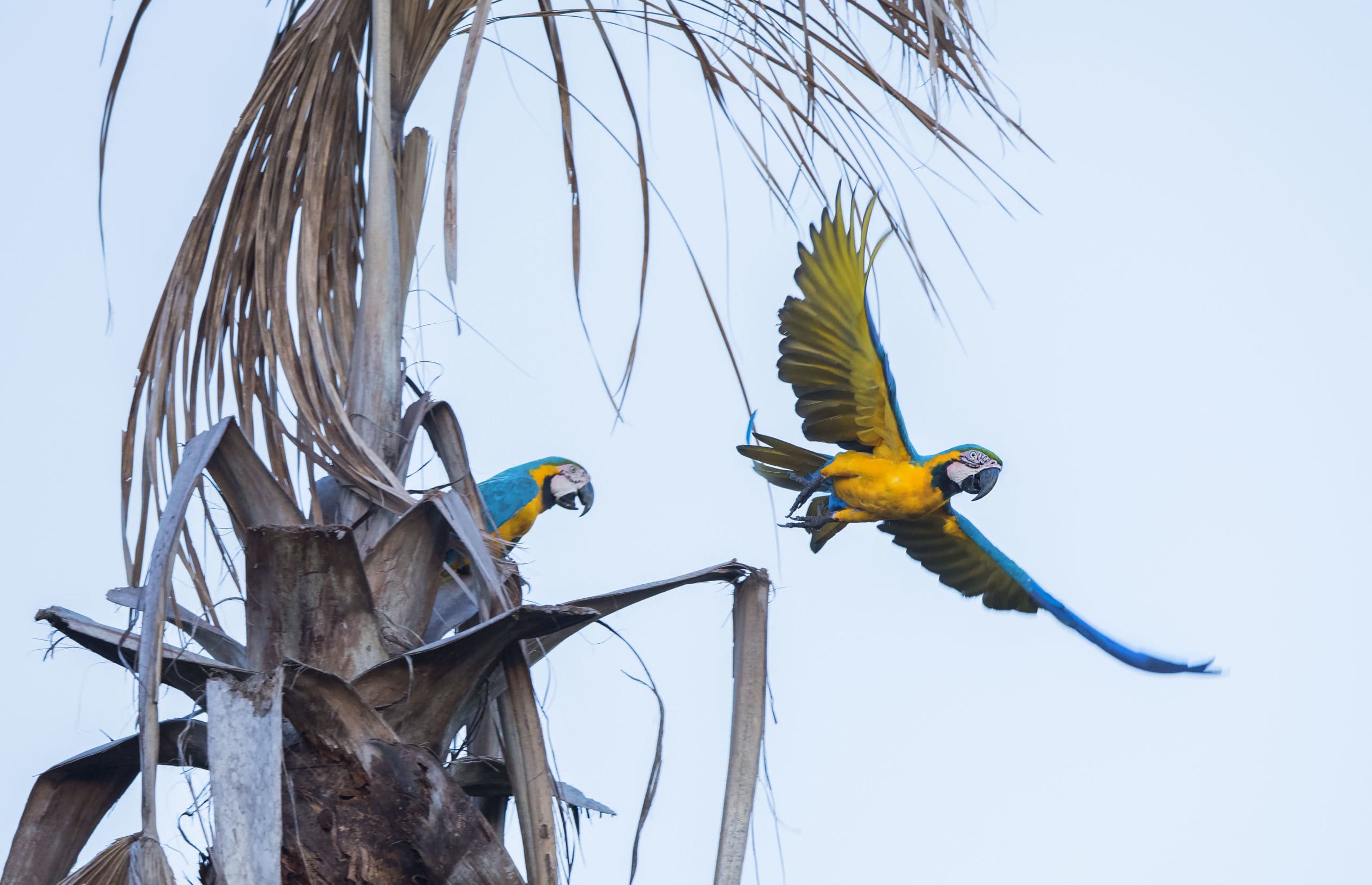
Spectacular Wildlife: Discover the blue and yellow macaw (Ara ararauna), famous for its brilliant blue and golden-yellow feathers.
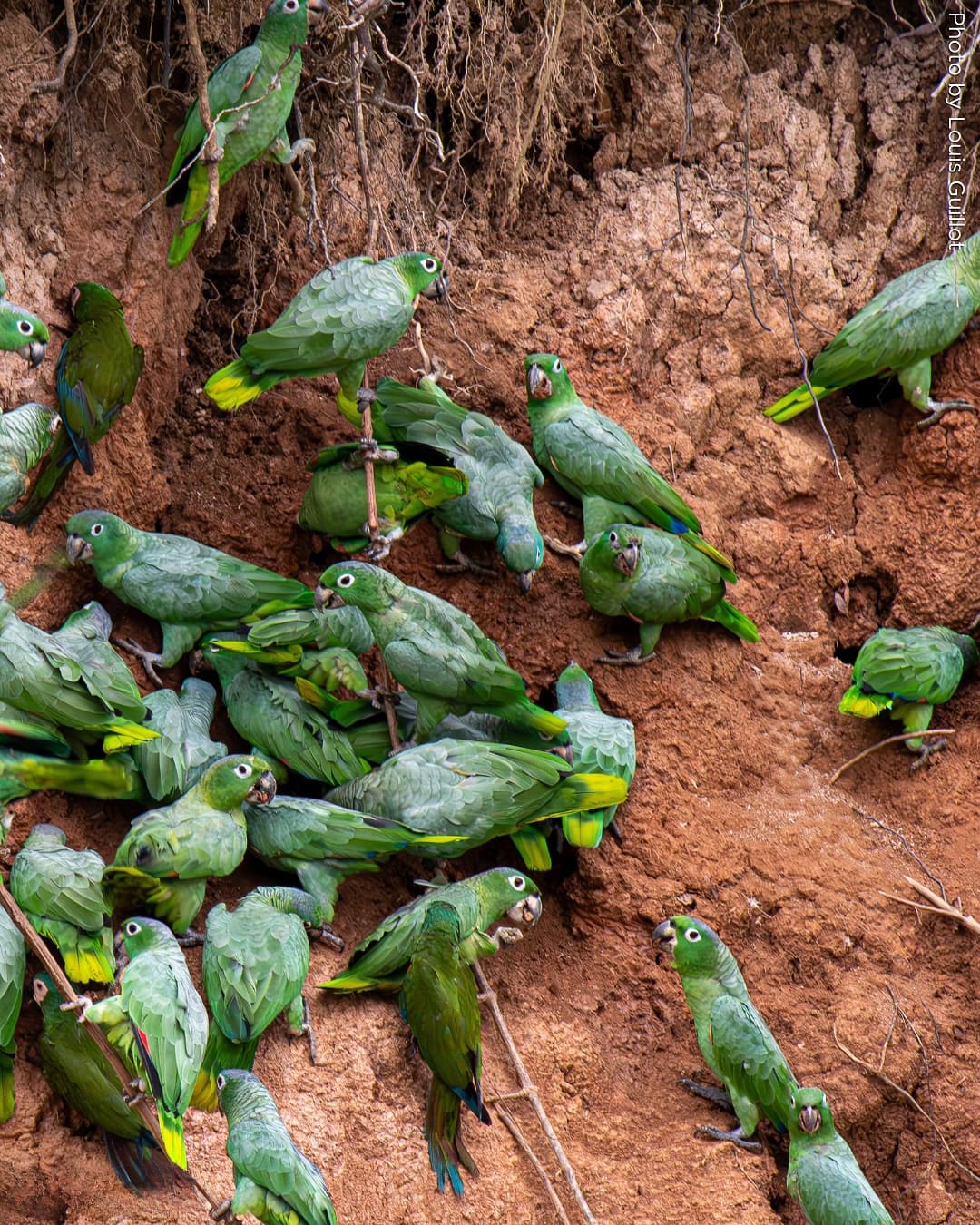
Macaw Clay Licks: Visit the famous Chuncho and Colorado clay licks to observe macaws, parrots, and parakeets gathering to feed on mineral-rich soil.
Amazon Rainforest Exploration: Experience the incredible biodiversity of Tambopata National Reserve in southeastern Peru.
Birdwatching Opportunities: Spot blue and yellow macaws, scarlet macaws, red-and-green macaws, and other fascinating Amazonian birds.
Unique Bird Behavior: Learn about macaw feeding habits, social behavior, nesting, and family life.
Best Time for Observation: Explore clay licks in the early morning, when bird activity is often greatest. May to October generally offers drier travel conditions.
Guided Nature Excursions: Enjoy riverboat journeys, rainforest walks, wildlife photography, and expert guidance from local naturalists.
Responsible Ecotourism: Discover the importance of protecting macaw habitats and preserving the Amazon rainforest.
Unforgettable Amazon Experience: Perfect for birdwatchers, nature enthusiasts, wildlife photographers, and travelers seeking an authentic Peruvian Amazon adventure.
Galeria de Fotos


SUMMARY
Best Rainforest Bird Macaw Blue and Yellow Macaw
Best Rainforest Bird Macaw Blue Yellow Macaw : Tambopata Tours in Peru
The article presents Tambopata, in southeastern Peru, as an excellent destination for observing blue and yellow macaws (Ara ararauna) in their natural Amazon rainforest habitat. Known for their
vibrant blue and golden-yellow feathers, loud calls, intelligence, and social behavior, these parrots are among the region’s most fascinating bird species.
Key highlights include:
Macaw characteristics: Blue and yellow macaws typically measure 76–86 cm in length and weigh 900–1,500 grams. They feed on nuts, seeds, fruits, and other plant materials.
Best places to see macaws: The Chuncho and Colorado clay licks are popular wildlife-viewing locations where macaws, parrots, and parakeets gather to consume mineral-rich soil.
Other wildlife: Visitors may also see scarlet macaws, red-and-green macaws, harpy eagles, monkeys, and other Amazonian species. Blue and yellow Macaws
Best time to visit: Macaws can be observed year-round. May to October is generally drier, while early-morning visits offer good opportunities to observe activity at clay licks.
Tour experiences: Guided excursions may include boat trips along Amazonian rivers, rainforest hikes, birdwatching, wildlife photography, and learning about Amazonian ecosystems.
Conservation: Responsible tourism is essential. Visitors should follow their guides’ instructions, avoid disturbing wildlife, keep their distance from nests, and choose operators committed to protecting the rainforest.
The article also explains the macaw’s breeding habits, long-term pair bonds, nesting requirements, and dependence on healthy forest habitats.
Conclusion
A Tambopata macaw tour offers an unforgettable opportunity to experience the biodiversity of the Peruvian Amazon. By visiting natural clay licks and exploring the rainforest with knowledgeable
local guides, travelers can observe colorful parrots, discover unique wildlife, and support rainforest conservation through responsible tourism. Because wildlife activity varies with weather and
natural conditions, sightings cannot be guaranteed. Amazon rainforest
Plan Your Blue and Yellow Macaw Tambopata Tour
A visit to Tambopata offers much more than the chance to photograph a colorful parrot. It is an opportunity to discover the extraordinary ecosystems of the Peruvian Amazon, learn about tropical
wildlife, and experience one of South America’s most remarkable birdwatching destinations.
From the early-morning activity at macaw clay licks to the sounds of birds flying over the river, each excursion provides a different perspective on rainforest life.
If you are planning a trip to Peru, consider including a blue and yellow macaw Tambopata tour in your itinerary. Choose a suitable guided excursion, prepare for the tropical climate, and explore
the Amazon with respect for its wildlife and natural environment. amazon peru manu
Discover Tambopata and experience the beauty of macaws in the wild. Contact our team to learn about available tours, itineraries, and birdwatching experiences in the Peruvian Amazon.
ITINERARY
Blue and Yellow Macaw – Tambopata Tours in Peru
Discover the spectacular blue and yellow macaw in Tambopata, one of the most fascinating wildlife destinations in the Peruvian Amazon. Known for its brilliant plumage, powerful beak, and distinctive calls, this magnificent parrot is one of the highlights of a rainforest adventure in southeastern Peru.
Tambopata tours offer an opportunity to explore tropical rainforest, observe colorful parrots and macaws, and experience the extraordinary biodiversity of the Amazon. Among the most memorable activities for nature lovers is visiting a natural macaw clay lick, locally known as a collpa, where several species of parrots may gather to feed on mineral-rich soil.
Whether you are a passionate birdwatcher, wildlife photographer, or traveler seeking an authentic Amazon experience, Tambopata is an excellent destination to discover Peru’s remarkable birdlife.
What Is the Blue and Yellow Macaw?
The blue and yellow macaw (Ara ararauna), also called the blue-and-gold macaw, is a large parrot native to tropical regions of Central and South America. It inhabits a variety of forest environments, including Amazonian rainforest, riverine woodland, and palm-rich habitats.
This species is admired for its striking colors, social behavior, and intelligence. Blue and yellow macaws often travel in pairs or small groups and communicate through loud calls that can be heard across the rainforest canopy.
In Tambopata, these colorful parrots form part of a rich bird community that makes the region particularly attractive for guided wildlife observation.
Physical Characteristics of the Blue and Yellow Macaw
The blue and yellow macaw is easy to recognize because of its vivid colors and impressive size.
Its upperparts, including the wings and long tail, are predominantly blue. The chest and belly display bright golden-yellow plumage, while the forehead has a greenish tint. The bird also has a large black beak, a pale facial patch marked with fine dark feather lines, and strong feet adapted for climbing and handling food.
Size and Weight
Adult blue and yellow macaws typically measure approximately 76–86 centimeters (30–34 inches) from head to tail. Their weight generally ranges from about 900 to 1,500 grams, depending on the individual.
Their long tails, broad wings, and powerful flight make them particularly impressive when they cross open river channels or fly above the Amazonian forest.
Diet and Feeding Habits
Blue and yellow macaws feed mainly on nuts, seeds, fruits, and other plant materials. Their strong beaks help them open hard-shelled foods that many other birds cannot easily access.
Macaws may also visit natural clay licks, where they consume soil containing minerals. Scientists have proposed several explanations for this behavior, including mineral supplementation and the possible neutralization of certain dietary compounds.
Observing this behavior in the wild is one of the most interesting experiences available to visitors on macaw-watching tours in Tambopata.
Reproduction and Family Life
Blue and yellow macaws generally form long-term pair bonds and may remain with the same partner for many years. During the breeding season, they seek suitable nesting cavities, often in large trees.
Females usually lay a small clutch of eggs, and both parents contribute to the care and protection of their offspring. The chicks hatch helpless and depend on their parents for food, warmth, and protection while they grow.
Young macaws gradually develop their feathers and flight abilities before becoming more independent. Their extended development highlights the importance of protecting mature trees and undisturbed nesting habitats throughout the Amazon.
In suitable conditions, blue and yellow macaws can live for several decades. Their long lifespan, complex behavior, and dependence on healthy natural habitats make them important ambassadors for rainforest conservation.
Where to See Blue and Yellow Macaws in Peru
If you want to observe macaws in their natural environment, Tambopata, in the Madre de Dios region of southeastern Peru, is one of the country’s most rewarding destinations.
The region contains extensive Amazonian forests, winding rivers, palm swamps, and natural feeding areas that support a remarkable variety of birds and other wildlife.
The Tambopata National Reserve protects important habitats for macaws, parrots, monkeys, giant river otters, and numerous other rainforest species. Its biodiversity makes it an excellent destination for travelers interested in ecotourism, birdwatching, and guided nature excursions.
Chuncho Macaw Clay Lick
The Chuncho clay lick is one of the best-known attractions for macaw watching in the Tambopata area. This natural riverbank formation attracts colorful parrots and macaws that gather to feed on mineral-rich clay.
Bird activity often begins early in the morning, when individual birds arrive in stages before larger groups settle near the clay wall. Depending on weather conditions and natural activity, visitors may observe blue and yellow macaws alongside scarlet macaws, red-and-green macaws, and other parrot species.
A guided excursion provides an opportunity to learn about the birds’ behavior, feeding patterns, and ecological importance while observing them from an appropriate distance.
Colorado Macaw Clay Lick
Another notable destination is the Colorado clay lick, where macaws, parrots, and parakeets may gather along the riverbank.
The experience can be especially rewarding for birdwatchers and photographers interested in observing different species in one natural setting. The number of birds and the timing of their visits vary according to weather and other environmental conditions, so sightings cannot be guaranteed.
Both Chuncho and Colorado offer excellent opportunities to appreciate the connection between Amazonian wildlife and the ecosystems that sustain it.
What Other Birds Can You See in Tambopata?
Blue and yellow macaws are only part of Tambopata’s extraordinary bird diversity. During a guided birdwatching excursion, visitors may also encounter:
Scarlet macaws: Recognizable by their brilliant red plumage and contrasting blue and yellow wings.
Red-and-green macaws: Large parrots with vivid red bodies and green-and-blue wing feathers.
Parrots and parakeets: Social birds that frequently move through the canopy and gather at feeding sites.
Harpy eagles: Powerful forest raptors that inhabit parts of the Amazon, although sightings are uncommon.
Curassows and trumpeters: Forest-dwelling birds that may be encountered in suitable habitats.
Wildlife sightings depend on the season, habitat, weather, and the natural movements of animals. An experienced local guide can help visitors identify species and understand their behavior.
Best Time to See Macaws in Tambopata
Macaws can be observed in Tambopata throughout the year, but the conditions for travel and wildlife observation vary by season.
The drier months, generally from May to October, are often popular for rainforest excursions because rainfall is typically lower. The rainy season, usually from December to March, brings wetter conditions that can influence river travel, forest trails, and access to certain locations.
Early morning is often the preferred time to visit macaw clay licks because many birds gather around sunrise when conditions are favorable. However, bird activity is unpredictable, and clear weather does not guarantee a large gathering.
For the best experience, choose a tour with a knowledgeable local guide and allow enough time to explore the rainforest at a relaxed pace.
What to Expect on a Tambopata Macaw Tour
A macaw-watching excursion combines river travel, rainforest scenery, and opportunities to observe wildlife in its natural habitat.
Depending on the itinerary and accommodation location, your experience may include:
- Traveling by boat along Amazonian rivers.
- Visiting a macaw clay lick during the early morning.
- Observing parrots, macaws, and other birds with binoculars.
- Exploring rainforest trails with a local naturalist guide.
- Photographing wildlife and learning about Amazonian ecosystems.
- Discovering conservation initiatives and the importance of protecting tropical forests.
- Some itineraries require several hours of river travel to reach remote clay licks. Check the route, departure time, accommodation, and included activities before booking your excursion.
Responsible Wildlife Watching in Tambopata
Protecting wildlife is an essential part of a rewarding Amazon experience. Responsible tourism helps reduce disturbance to birds and supports the long-term conservation of their habitats.
During your macaw tour, follow your guide’s instructions, remain in designated observation areas, and avoid approaching nests or feeding wild birds. Keep noise to a minimum, never use food to attract wildlife, and take all rubbish back with you.
Choose authorized operators that respect protected-area regulations and prioritize responsible wildlife observation.
By traveling thoughtfully, visitors can appreciate the beauty of Tambopata while helping preserve the rainforest for future generations.
SERVICES
GALLERY LODGE
FAQs - FREE INFO
Frequently Asked Questions About Blue and Yellow Macaws – Tambopata Tours in Peru
1. What is a blue and yellow macaw?
The blue and yellow macaw (Ara ararauna), also known as the blue-and-gold macaw, is a large tropical parrot recognized by its brilliant blue wings, golden-yellow chest, long tail, and powerful black beak. It inhabits tropical forests across parts of Central and South America, including the Peruvian Amazon.
2. Where can I see blue and yellow macaws in Peru?
Tambopata, in the Madre de Dios region of southeastern Peru, is one of the best destinations for observing macaws in their natural habitat. Visitors can explore Amazonian rainforest and visit natural clay licks where macaws, parrots, and other bird species gather.
3. What is the best place to see macaws in Tambopata?
The Chuncho and Colorado macaw clay licks are among the best-known locations for macaw watching in the Tambopata region. These natural feeding sites attract several parrot species, offering excellent opportunities for wildlife observation and photography.
4. What is a macaw clay lick?
A macaw clay lick, locally called a collpa, is a natural area of exposed soil where macaws, parrots, and parakeets gather to consume mineral-rich clay. Scientists believe this behavior may help birds obtain minerals and counteract certain compounds in their diet.
5. What is the best time to see blue and yellow macaws in Tambopata?
Macaws can be observed throughout the year. The dry season, generally from May to October, is popular for rainforest excursions because rainfall is often lower. Early morning is usually the preferred time to visit clay licks, although bird activity depends on weather and natural conditions.
6. What time do macaws visit the clay licks?
Macaw activity often begins around sunrise or during the early morning. Birds may arrive in small groups before larger gatherings develop. Exact arrival times and the number of birds vary, so sightings cannot be guaranteed.
7. What other bird species can I see during a Tambopata macaw tour?
Depending on the location and conditions, visitors may see scarlet macaws, red-and-green macaws, parrots, parakeets, and many other Amazonian birds. Other wildlife, including monkeys and giant river otters, may also be encountered during rainforest excursions.
8. How big is a blue and yellow macaw?
Adult blue and yellow macaws typically measure approximately 76–86 centimeters (30–34 inches) from head to tail and weigh around 900–1,500 grams. Their impressive size, colorful feathers, and loud calls make them easy to recognize.
9. What do blue and yellow macaws eat?
Their diet consists mainly of nuts, seeds, fruits, and other plant materials. Their strong beaks allow them to crack hard-shelled foods. They may also visit clay licks to consume mineral-rich soil.
10. Can I photograph blue and yellow macaws in Tambopata?
Yes. Tambopata offers excellent opportunities for wildlife photography, particularly at macaw clay licks and along rainforest rivers. Bring a camera with a suitable telephoto lens or binoculars, and follow your guide’s instructions to avoid disturbing the birds.
11. How long does a Tambopata macaw tour last?
Tour duration depends on your itinerary, accommodation, and the location of the clay lick. Some excursions are organized as early-morning activities from a nearby lodge, while others require several hours of river travel or form part of a multi-day Amazon adventure. Check the itinerary before booking.
12. Do I need a guide to see macaws in Tambopata?
A knowledgeable local guide is highly recommended. Guides can help identify bird species, explain their behavior, navigate rainforest routes, and organize visits to suitable observation sites while respecting wildlife and protected-area regulations.
13. What should I bring on a Tambopata macaw-watching tour?
Consider bringing binoculars, a camera, lightweight long-sleeved clothing, comfortable walking shoes, insect repellent, sunscreen, a rain jacket, drinking water, and a waterproof bag for electronic equipment. Your tour operator can advise you about additional items required for your itinerary.
14. Are blue and yellow macaws endangered?
The blue and yellow macaw is currently classified as a species of Least Concern globally, although local populations may face threats from habitat loss and illegal wildlife trade. Protecting rainforest habitats and supporting responsible ecotourism help conserve the species and the wider Amazon ecosystem.
15. Are macaw sightings guaranteed on Tambopata tours?
No. Macaws are wild animals, and their movements depend on weather, food availability, and other environmental factors. Visiting well-known clay licks with an experienced guide can improve your opportunities, but sightings and the number of birds cannot be guaranteed.
16. Is Tambopata suitable for birdwatching beginners?
Yes. Tambopata is an excellent destination for beginners and experienced birdwatchers alike. Guided excursions offer opportunities to observe colorful macaws, learn to identify Amazonian birds, and discover the rainforest’s remarkable biodiversity.
17. How can I watch macaws responsibly?
Remain in designated observation areas, keep noise low, follow your guide’s instructions, and never feed or approach wild birds. Avoid disturbing nests and leave no rubbish behind. Choose responsible tour operators that respect wildlife and protected-area regulations.
18. Why should I choose Tambopata for a macaw-watching adventure?
Tambopata combines rich bird diversity, spectacular rainforest scenery, winding Amazonian rivers, and renowned macaw clay licks. It offers travelers an opportunity to experience Peru’s wildlife, learn about rainforest conservation, and enjoy an authentic Amazonian nature adventure.
GUIA DE VIAJES
Nutrition and Diet of the Blue and Yellow Macaw
The blue and yellow macaw (Ara ararauna) feeds on a variety of natural foods found throughout its tropical forest habitat. Its diet includes fruits, nuts, seeds, and palm fruits, which provide the energy and nutrients needed for flight, growth, and daily activities.
These intelligent parrots use their powerful beaks to crack hard shells and reach nutritious seeds. Depending on food availability, they may travel considerable distances between feeding areas, resting sites, and nesting locations.
One of the most fascinating feeding behaviors observed in several Amazonian parrot species is geophagy, the consumption of mineral-rich soil at natural clay licks. In Tambopata, these sites, locally known as collpas, attract different species of macaws, parrots, and parakeets. Researchers suggest that clay consumption may help supplement certain minerals and reduce the effects of compounds present in some foods.
Visiting a macaw clay lick during a Tambopata tour provides an opportunity to observe these remarkable feeding behaviors while learning about the ecological relationships that sustain Amazonian wildlife.
Behavior of the Blue and Yellow Macaw
Blue and yellow macaws are social, vocal, and highly intelligent birds. They are often seen flying in pairs or small groups and may gather in larger flocks where food is abundant.
Their loud calls help individuals communicate across the rainforest, particularly when birds are flying between feeding areas or gathering in the treetops.
Pair Bonds and Social Interaction
Blue and yellow macaws commonly form long-term pair bonds. Mated birds frequently fly close together, sometimes with their wings nearly touching, and may remain near each other while feeding or resting.
Although macaws are social birds, flock size varies depending on the season, food availability, and location. Groups do not necessarily follow a single permanent leader; their movements reflect interactions among individual birds and changing environmental conditions.
In the wild, observing macaws in pairs and groups is one of the memorable experiences for visitors interested in birdwatching in Tambopata, Peru.
Communication and Intelligence
These parrots communicate through a range of loud calls, body movements, and social interactions. Their intelligence helps them solve feeding challenges, recognize familiar individuals, and adapt to changing conditions.
Their strong social bonds and distinctive vocalizations make blue and yellow macaws particularly fascinating subjects for wildlife photography and natural history observation.
Blue and Yellow Macaws in Captivity
Blue and yellow macaws can develop strong social bonds with humans when raised and cared for in appropriate circumstances. They may learn routines, imitate sounds, and, in some cases, reproduce human words.
However, their ability to mimic speech varies considerably between individuals. Talking is not guaranteed, and vocal imitation should not be confused with human language comprehension.
These birds have demanding physical, social, and mental needs. Their large size, powerful beaks, loud calls, long tails, and need for extensive movement mean that they require much more specialized care than many traditional companion animals.
Captive macaws need spacious, secure environments, opportunities for flight and exercise, suitable enrichment, and regular veterinary attention from an avian veterinarian. Inadequate housing can contribute to feather damage, stress, and other health problems.
For wildlife enthusiasts visiting Tambopata, observing macaws in their natural environment offers a valuable alternative to keeping these remarkable birds as pets. Responsible wildlife tourism also helps promote appreciation for the rainforest ecosystems on which they depend.
Caring for Blue and Yellow Macaws
Caring for a blue and yellow macaw requires substantial time, knowledge, financial resources, and a long-term commitment. These birds are intelligent and socially complex, and their welfare depends on more than simply providing food and a cage.
Responsible care includes:
- Providing a large, safe enclosure with suitable perches and opportunities for movement.
- Offering daily enrichment, foraging activities, and appropriate social interaction.
- Maintaining a balanced diet recommended by an avian veterinarian.
- Scheduling regular veterinary examinations and monitoring changes in behavior or appetite.
- Ensuring access to clean water, suitable resting areas, and a safe environment free from household hazards.
- Because macaws can live for several decades, prospective owners should carefully consider their long-term ability to meet these needs. Local
- wildlife regulations and legal requirements for keeping parrots must also be respected.
Wild macaws should never be captured from their natural habitat to supply the pet trade.
Diet and Feeding Requirements of Blue and Yellow Macaws
In captivity, blue and yellow macaws need a nutritionally balanced diet rather than a mixture consisting mainly of seeds. Diets that are excessively high in fat or nutritionally incomplete can contribute to serious health problems over time.
Depending on veterinary guidance, an appropriate feeding plan may include a formulated parrot pellet as a dietary foundation, carefully selected fresh vegetables, suitable fruits, and measured portions of nuts and seeds.
Food choices should reflect the bird’s individual nutritional requirements, health, age, and activity level. Fresh drinking water should always be available, and food preparation areas should be kept clean to reduce the risk of contamination.
Human foods should not automatically be shared with companion parrots. Processed snacks, salty foods, sugary products, and meals containing unsuitable ingredients may be harmful.
A qualified avian veterinarian can help establish an appropriate feeding plan and recommend changes when necessary.
Toxic Foods for Blue and Yellow Macaws
Certain foods commonly consumed by humans can be dangerous to parrots. Avocado, chocolate, and caffeine-containing products should not be offered to blue and yellow macaws.
Fruit pits and seeds also require caution because some contain potentially harmful compounds, and large or hard pieces may create choking or obstruction risks. Remove pits and seeds when appropriate, and offer only foods known to be safe for parrots.
Other hazards include alcohol, highly salted foods, and products containing artificial ingredients that have not been established as safe for birds.
If a macaw accidentally consumes a potentially toxic food, contact an avian veterinarian promptly rather than waiting for symptoms to develop.
Discover Blue and Yellow Macaws in Tambopata, Peru
Tambopata offers a unique opportunity to learn about macaws through responsible wildlife observation. Its tropical forests, riverbanks, and natural clay licks support a diverse community of parrots and other bird species.
During a guided Tambopata birdwatching excursion, visitors may have the chance to observe macaws flying above the rainforest, feeding in the canopy, or gathering at a clay lick.
Sightings and bird activity depend on weather, season, and natural conditions, but the experience offers an unforgettable introduction to the biodiversity of the Peruvian Amazon.
Explore Tambopata with a knowledgeable local guide and discover why protecting rainforest habitats is essential for the future of blue and yellow macaws and the many other species that share their environment.