Amazonas Expeditions Peru Tambopata Candamo
Amazonas Expeditions Peru Tambopata Candamo Complete Guide to Discovering the Amazon of Madre de Dios
Meta title: Tambopata National Reserve: What to See, How to Get There, and 2026 Guide
Tambopata National Reserve
Sandoval Lake, Tambopata Madre de Dios, Tambopata Reserve, macaw clay lick, Chuncho Clay Lick, Colorado Clay Lick, tourism in Tambopata, Peruvian Amazon, what to do in Tambopata
Tambopata National Reserve: An Adventure in the Heart of the Peruvian Amazon
There are places where traveling simply means discovering a landscape. In the Tambopata National Reserve, however, the experience means entering one of Peru’s most extraordinary natural environments and observing how the forest, rivers, oxbow lakes, and wildlife form a living ecosystem.
Located in the province of Tambopata, in the department of Madre de Dios, this protected natural area preserves 274,690 hectares of Amazonian forests and was established through Supreme Decree No. 048-2000-AG.
Visit Natural Areas Amazonas Expeditions Peru Tambopata Candamo
Its proximity to Puerto Maldonado makes it possible to combine convenience and nature. From the city, travelers can begin their journey toward areas such as Sandoval, Middle Tambopata, and Upper Tambopata, each offering different landscapes and experiences.
Here you can navigate Amazonian rivers, walk along forest trails, explore lakes surrounded by palm trees, and look for species such as giant river otters, caimans, monkeys, toucans, and macaws.
And there is one spectacle that many travelers particularly look forward to: watching large concentrations of parrots and macaws at the famous clay licks of Tambopata.
Where Is the Tambopata National Reserve?
The Tambopata National Reserve is located in the province of Tambopata, department of Madre de Dios, in southeastern Peru.
The reserve encompasses part of the Tambopata and Madre de Dios river basins and is ecologically connected to other protected areas in the region, including Bahuaja Sonene National Park.
Its location makes Puerto Maldonado one of the main starting points for exploring this part of the Peruvian Amazon.
Why Is the Tambopata National Reserve Important?
The value of Tambopata is not limited to tourism.
- The reserve protects Amazonian ecosystems and extraordinary biological diversity, while also contributing to the conservation of important ecological processes and landscapes.
- Its environments include terrace forests, riverine forests, aguajales, pacales, Brazil nut forests, oxbow lakes, and clay licks.
- This diversity of habitats allows numerous species to find food, shelter, and places to reproduce.
- SERNANP highlights Tambopata as an area of great biodiversity, with emblematic species such as giant river otters, harpy eagles, jaguars, anacondas, monkeys, and macaws.
Visit Natural Areas – Amazonas Peru Tambopata Candamo Expeditions
The Biodiversity of Tambopata : One of the main reasons to visit the reserve is the possibility of observing wildlife in its natural environment.
Among the species that can be found in the area are:
Mammals
The forest and aquatic environments provide refuge for species such as:
- Giant river otter.
- Otter.
- Jaguar.
- Puma.
- Ocelot.
- Margay.
- Tapir.
- White-lipped peccary.
- Collared peccary.
- Deer.
- Sloths.
- Spider monkeys.
- Howler monkeys.
- Squirrel monkeys.
The giant river otter, also known as the giant otter, is one of the animals most sought after by visitors exploring the oxbow lakes.
Birds
Tambopata is especially attractive to birdwatchers.
During an excursion, it is possible to encounter macaws, parrots, toucans, curassows, and numerous species native to the Amazonian forest.
Among the emblematic species are the scarlet macaw, blue-and-yellow macaw, red-and-green macaw, and harpy eagle.
Biodiversity figures vary depending on the source, period, and methodology used. Therefore, for up-to-date tourism information, it is advisable to use figures published by SERNANP and other official institutions. Currently, SERNANP highlights approximately 600 bird species, 169 mammals, 103 reptiles, 103 amphibians, and 205 fish species for the reserve.
Visit Natural Areas – Amazonas Peru Tambopata Candamo Expeditions
The Landscapes That Make Tambopata Special
Biodiversity is only one part of the experience.
The Amazonian landscape changes constantly as you travel along the river or walk through the forest trails.
You can go from a river surrounded by vegetation to a forest of enormous trees, discover a peaceful oxbow lake covered with aquatic plants, or arrive at a clay cliff where hundreds of birds gather.
Some of the most characteristic landscapes and ecosystems include:
- Oxbow lakes or meander lakes.
- Floodplain forests.
- Terrace forests.
- Aguajales.
- Brazil nut forests.
- Pacales.
- Riverine forests.
- Clay licks.
What to Do in the Tambopata National Reserve?
1. Visit Sandoval Lake
Sandoval Lake is one of Tambopata’s best-known destinations and one of the main attractions for visitors coming to the reserve for the first time.
The journey from Puerto Maldonado combines river transportation with a walk through the forest. SERNANP currently indicates an access route of approximately 30 minutes by river followed by a walk of about 3 kilometers.
Visit Natural Areas
Once at the lake, travelers can navigate its waters and observe different species of birds, monkeys, caimans, and, with some luck, giant river otters.
The tranquility of the lake also allows visitors to appreciate one of the most fascinating characteristics of the Amazon: a landscape that seems to change from moment to moment depending on the light, the movement of the water, and the sounds of the forest.
2. Explore the Oxbow Lakes of Middle Tambopata
The Middle Tambopata sector offers other excellent settings for wildlife observation.
Among the best-known locations are:
- Cocococha Lake.
- Sachavacayoc Lake.
- Condenado Lake.
- La Torre sector.
The oxbow lakes are especially interesting for visitors who want to observe birds and aquatic wildlife.
The journey requires more time than a visit to the Sandoval sector, making it an interesting alternative for travelers who have several days available.
3. Visit Chuncho Clay Lick – Amazonas Peru Tambopata Candamo Expeditions
Chuncho Clay Lick is one of the major attractions of Upper Tambopata.
Clay licks are walls or areas of soil where different animals consume clay and minerals. At Chuncho, numerous species of psittacines, including parrots and macaws, may gather.
MINCETUR lists Chuncho as a tourist attraction in the Upper Tambopata sector and indicates that bird observation can begin in the early morning hours.
For travelers, the experience begins long before reaching the clay lick: traveling along the Tambopata River is part of the adventure.
4. Observe Colorado Clay Lick
Colorado Clay Lick is another major attraction within the reserve.
On suitable days, visitors can observe numerous birds approaching the clay walls.
The greatest activity generally occurs early in the morning, which is why excursions usually begin before sunrise.
The experience depends on natural factors such as weather, river levels, and the presence of wildlife. Therefore, no responsible tour operator can guarantee that a specific number of macaws will be seen.
What Is the Best Time to Visit the Peruvian Amazon?
SERNANP identifies May through October as the recommended period for visiting the Tambopata National Reserve. The climate is humid and hot, with an average annual temperature of approximately 26°C.
Visit Natural Areas
However, Tambopata can be visited at different times of the year.
May to October
This is the period recommended by SERNANP.
It can be a good option for travelers who want to combine forest excursions, river trips, and wildlife observation.
December to March
This period has a greater presence of rainfall.
Rain is part of the Amazonian experience and does not necessarily mean that a trip is impossible, but it can affect trails, navigation, and activities.
Tip: Before traveling, check current conditions and recommendations from SERNANP and your authorized tour operator.
How to Get to the Tambopata National Reserve
Most travelers use Puerto Maldonado as their gateway.
From there, transportation continues mainly by river toward the different sectors of the reserve.
SERNANP currently provides the following access references:
Lima to Puerto Maldonado: approximately 1 hour and 20 minutes by plane.
Cusco to Puerto Maldonado: approximately 10 hours by road, around 465 km.
Puerto Maldonado to the Sandoval sector: approximately 30 minutes by river, followed by a 3 km walk.
Middle Tambopata: several hours of navigation followed by travel along forest trails.
Upper Tambopata: approximately 5 hours and 30 minutes by river, according to the access route indicated by SERNANP.
Visit Natural Areas
Travel times may vary depending on the departure point, river level, type of boat, and travel conditions.
What to Bring to the Amazon Rainforest?
To make the most of Amazonian excursions, it is best to be prepared.
- We recommend bringing:
- Lightweight, quick-drying clothing.
- Comfortable walking shoes.
- Rain jacket or poncho.
- Insect repellent.
- Sunscreen.
- Hat or cap.
- Reusable water bottle.
- Flashlight.
- Binoculars.
- Camera.
- Batteries or a portable charger.
- A small backpack for excursions.
Avoid bringing unnecessary items. In the rainforest, traveling light makes transportation easier.
Is It Possible to See Jaguars, Giant River Otters, and Macaws? – Amazonas Peru Tambopata Candamo Expeditions
Yes, these species are part of Tambopata’s wildlife, but observing wild animals is never guaranteed.
Travelers should understand that they are entering a natural ecosystem, not a zoo.
The possibility of finding a particular species depends on the season, weather, time of day, animal behavior, location visited, and many other factors.
Precisely because of this, one of the best attitudes during an excursion is to remain patient and observe the forest carefully.
Sometimes the great encounter will not be a jaguar. It may be a family of monkeys crossing the trees, a group of macaws flying over the river, or the sound of an animal you never actually manage to see.
Responsible Tourism in Tambopata
Visiting a protected natural area also involves responsibility.
SERNANP recommends following the instructions of park rangers, walking only along designated routes, not removing plants, and avoiding disturbing animals during their natural activities.
Visit Natural Areas
- During your trip:
- Do not feed the animals.
- Do not attempt to get too close to wildlife.
- Do not collect plants, seeds, stones, or other natural elements.
- Do not leave waste behind.
- Keep a safe distance from animals.
- Respect established trails.
- Follow the instructions of guides and park rangers.
Choose authorized tour operators.
The conservation of Tambopata also depends on how each visitor enjoys the forest.
How Much Does It Cost to Enter the Amazon?
Fees may be updated, so it is important to check them before traveling.
Currently, SERNANP publishes different rates depending on the type of visitor and length of stay. For a one-day visit, a general fee of S/ 30 is listed, while specific rates apply to national visitors, minors, and local residents.
Visit Natural Areas
In addition to the entrance fee to the protected area, you should consider other expenses:
Transportation from Puerto Maldonado.
- Boat transportation.
- Guide.
- Food.
- Accommodation.
- Additional activities.
- Excursion equipment.
Do You Need to Hire a Tour Operator? – Amazonas Peru Tambopata Candamo Expeditions
To visit the Tambopata National Reserve, SERNANP indicates that visitors must hire the services of authorized tour operators.
Visit Natural Areas
This is especially important because some sectors require river transportation, hiking, and advance coordination.
Before booking, ask exactly what the program includes: transportation, meals, accommodation, entrance fees, guide, activities, and insurance.
What Type of Traveler Will Enjoy This Tour Most?
Tambopata may be particularly attractive to:
- Nature lovers.
- Photographers.
- Birdwatchers.
- Families looking for an Amazonian experience.
- Travelers interested in ecotourism.
- People who enjoy hiking and river trips.
Travelers who want to discover Peru’s biodiversity.
You do not need to be a nature expert to enjoy it. All you need is curiosity, patience, and respect for the environment.
Tambopata National Reserve and Conservation – Amazonas Peru Tambopata Candamo Expeditions
The importance of Tambopata goes far beyond its tourist attractions.
The reserve forms part of an Amazonian landscape connected to other protected natural areas and territories of great ecological importance.
Its conservation helps protect forests, rivers, wildlife, and fundamental ecological processes.
In addition, nature tourism can help generate economic opportunities connected to conservation and local communities when it is developed according to appropriate criteria.
For this reason, visiting Tambopata should not be understood merely as an excursion to take photographs, but as an opportunity to learn about and appreciate one of Peru’s most important ecosystems. MANU TOURS
Frequently Asked Questions About the Tambopata National Reserve
Where is the Tambopata National Reserve located?
It is located in the province of Tambopata, department of Madre de Dios, in southeastern Peru.
What is the main attraction of Amazonas Peru Tambopata Candamo Expeditions?
Sandoval Lake is one of its best-known tourist attractions, while Chuncho and Colorado clay licks are notable for observing parrots and macaws.
Can you visit the Peruvian Amazon from Puerto Maldonado?
Yes. Puerto Maldonado is one of the main access points, and from there travelers can reach different sectors of the reserve.
What is the best time to travel? – Amazonas Peru Tambopata Candamo Expeditions
SERNANP particularly recommends the period between May and October.
Visit Natural Areas
How many days do I need? – Amazonas Peru Tambopata Candamo Expeditions
For a first experience, 2 or 3 days may be sufficient, while a stay of 4 or more days allows you to explore different sectors at a more relaxed pace.
What animals can be seen? – Amazonas Peru Tambopata Candamo Expeditions
Depending on the location and conditions, you may encounter monkeys, caimans, giant river otters, macaws, parrots, toucans, birds of prey, tapirs, and many other species.
Can jaguars be seen? – Amazonas Peru Tambopata Candamo Expeditions
The jaguar is part of the region’s wildlife, but observing one in the wild is unpredictable. No responsible trip should guarantee a jaguar sighting.
Is Tambopata suitable for families? – Amazonas Peru Tambopata Candamo Expeditions
Yes, although activities and distances should be selected according to the age and physical condition of the travelers.
Is it mandatory to hire a tour operator?
SERNANP indicates that tourist visits must be carried out through authorized operator services.
Visit Natural Areas
Final Tips for Traveling to the Rainforest
The Tambopata National Reserve is not visited simply to check a place off a map.
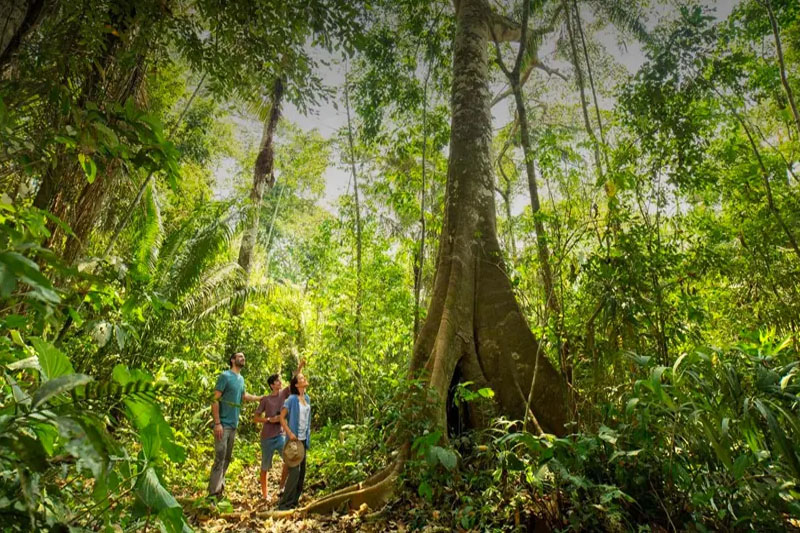
It is visited to hear the forest before seeing it, navigate Amazonian rivers, walk among giant trees, and discover that behind every sound there may be a new species.
Plan your trip in advance, check official conditions and fees before departure, choose authorized services, and maintain a respectful attitude toward nature.
Because the true luxury of Tambopata is not finding animals at any cost.
It is being able to observe them without altering the world to which they belong.
Essential Facts
Location: Tambopata Province, Madre de Dios, Peru
Area: 274,690 hectares
Established: September 4, 2000
Gateway city: Puerto Maldonado
Average annual temperature: approximately 26°C
Season recommended by SERNANP: May to October
Main tourist sectors: Sandoval, Middle Tambopata, and Upper Tambopata
Main attractions: Sandoval Lake, Cocococha, Sachavacayoc, Condenado, Chuncho Clay Lick, and Colorado Clay Lick